

When to Move from SD-WAN to SASE: Decision Gates and Coexistence
Decide whether an SD-WAN environment needs a broader SASE model, and plan a staged transition around access requirements, existing controls, contracts, operations, and measurable gates.
By Mark Poulton
When to Move from SD-WAN to SASE: Decision Gates and Coexistence
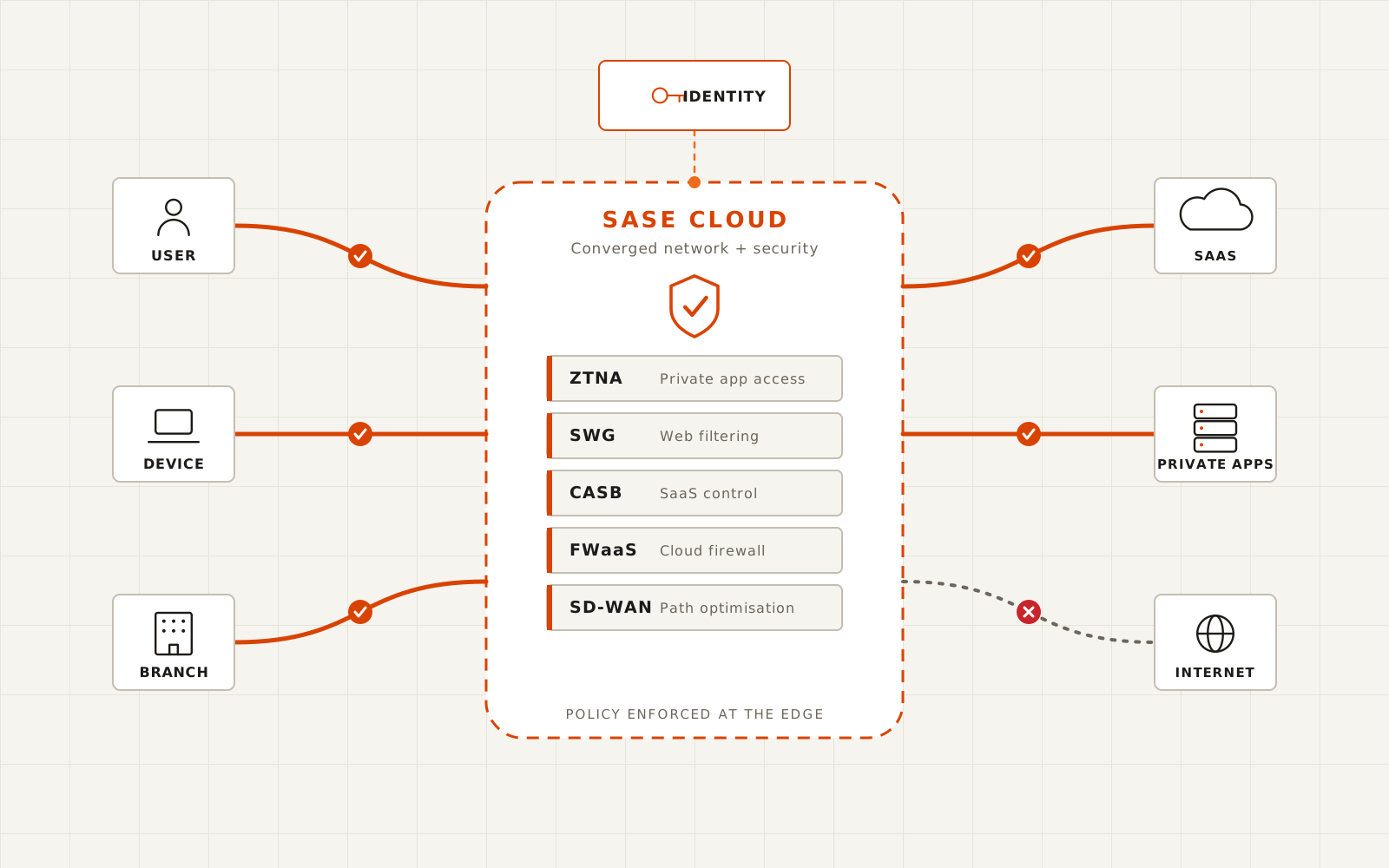
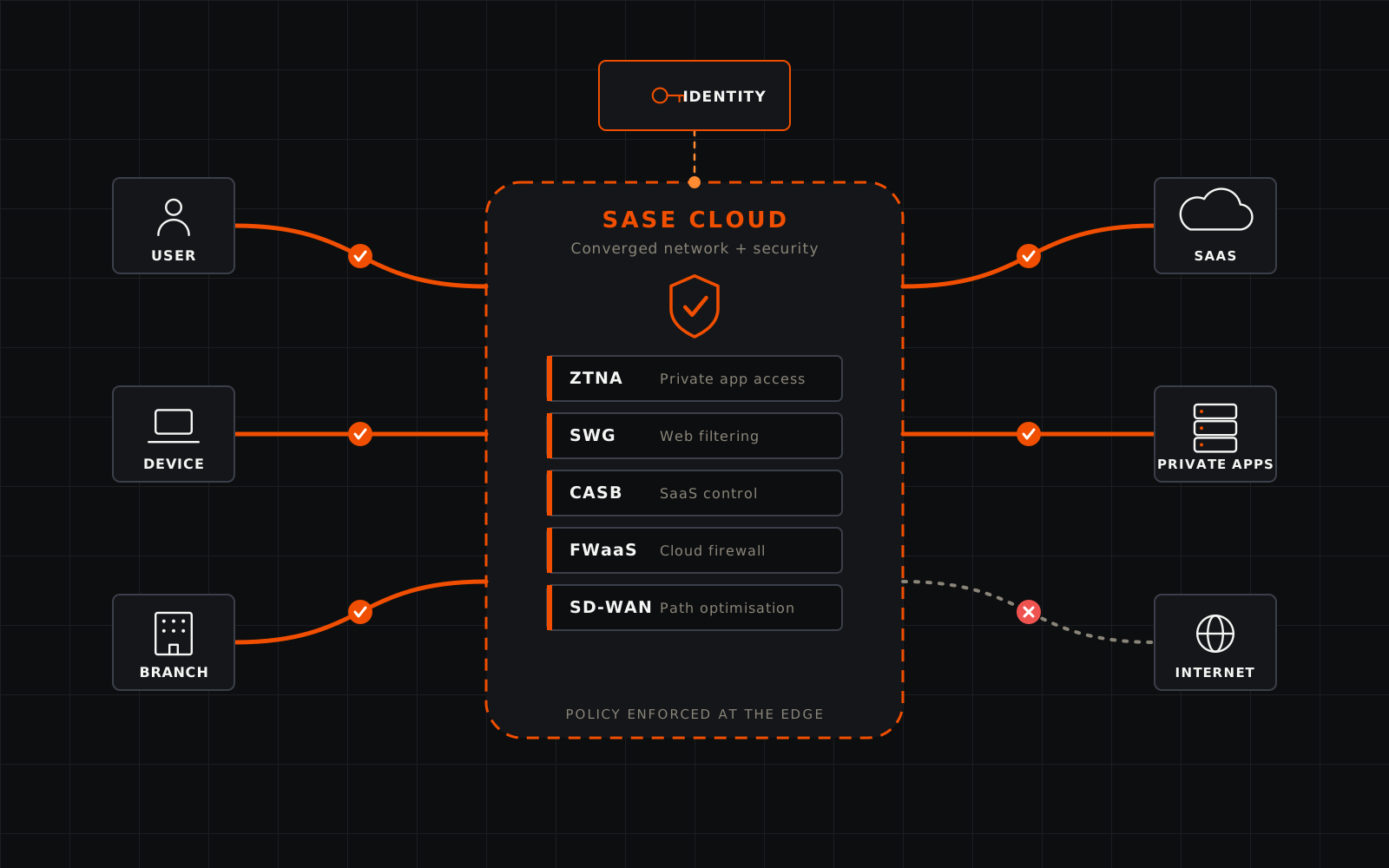
An organisation should consider moving from an SD-WAN environment toward SASE when a defined access or security requirement is not being met by the current combination of WAN and security services, and a coordinated model is a better fit than a narrower change. There is no universal migration deadline. SD-WAN addresses WAN connectivity and traffic policy; SASE brings networking and cloud-delivered security together around users, applications, and access paths. A SASE design may retain SD-WAN rather than replace it.
Start with the SASE fundamentals article to distinguish SASE from SD-WAN and SSE. The SD-WAN Deep Dive covers the existing network architecture. This article owns the decision to transition and how to manage coexistence; the SASE implementation article owns the broader architecture and implementation process.
What should trigger an evaluation?
An evaluation is warranted when teams can identify a concrete gap, such as inconsistent access policy for roaming users, separate controls that cannot provide the required visibility, or a planned application or workforce change that exposes limitations in current paths. These are prompts to investigate, not proof that a SASE platform is the answer.
| Signal | Question to answer before changing the architecture |
|---|---|
| Separate network and security services create operational hand-offs | Which specific work is duplicated or delayed, and would the proposed service actually remove it or shift it to a provider? |
| Remote, branch, SaaS, and private-app access use different controls | Which user-to-application paths lack a required policy, signal, or event trail? Can the gap be addressed without replacing the WAN? |
| A cloud or application change alters traffic paths | What routing, inspection, data handling, and resilience requirements apply to the new path? |
| Contracts or hardware are approaching renewal | Is there a genuine requirements gap, and do timing and exit terms make a transition practical? A renewal is an opportunity to review, not a reason by itself to migrate. |
| Current SD-WAN works well for site connectivity | Can it remain as the networking component while selected SASE or SSE capabilities are added? |
The MPLS vs SD-WAN comparison and SD-WAN security article help separate WAN service choices from security responsibilities. For remote-user paths, see SASE for remote and hybrid work.
When is migration premature?
Do not migrate because SASE is newer, because a vendor bundles it with SD-WAN, or because a forecast predicts market growth. A broader service may add provider dependency, licensing, integration work, policy complexity, or new support boundaries. It may also duplicate controls that already meet the requirement.
Migration is premature when the organisation cannot describe the user, application, or security problem; has not mapped important paths and dependencies; lacks ownership for identity, policy, logging, and incident response; or cannot test the proposed service against current experience and risk. In those cases, resolve the unknowns or improve a bounded existing control first.
How should timing be decided?
Use decision gates rather than a date-driven “move” plan:
- Define the outcome. State what must improve, which users or applications are in scope, and who owns the result. Define what must not regress.
- Map the current service. Record SD-WAN paths, security enforcement, identity and device signals, application dependencies, contracts, support teams, and known gaps. Mark unknowns explicitly.
- Compare target options. Assess keeping SD-WAN, adding selected SSE capabilities, using an integrated SASE service, or replacing only specific components. Compare equivalent requirements, total lifecycle effort, provider boundaries, data handling, and exit options.
- Check readiness and timing. Consider contract renewals, end-of-life dates, business changes, available staff, and support capacity. Do not let a renewal window override a failed security, resilience, or application requirement.
- Pilot one bounded path. Select a representative user or site group and validate identity, routing, inspection, logs, application experience, failover, support escalation, and rollback.
- Expand only when evidence passes. Set a named decision owner and agreed acceptance criteria for each wave. Retire a legacy component only after dependencies, records, contracts, and service owners confirm it is safe to do so.
How can SD-WAN and SASE coexist?
Coexistence is often a deliberate transition state and may also be the long-term design. An organisation could keep SD-WAN for branch connectivity while adding cloud-delivered security for selected users or traffic. It could use different services for branches and remote users, or retain existing controls for applications that cannot yet move.
Document where traffic enters each service, which component selects the route, where encryption and inspection occur, what policies are authoritative, how events are correlated, and who responds when a path crosses provider boundaries. Test both allowed and denied access, degraded links, provider or identity-service outages, and recovery. Avoid overlapping policies that create conflicting enforcement or make troubleshooting ambiguous.
What should count as a successful transition?
Measure the stated outcomes against a baseline, not against the product label. Track access success and user experience for representative applications, policy coverage and exceptions, incident investigation, support effort, contract and service costs, and the reliability of fallback paths. Separate observed changes from effects caused by simultaneous application, circuit, or staffing changes.
Vendor selection belongs in the SASE vendor evaluation. The transition itself succeeds when required access and security outcomes are met, operations understand the new boundaries, and the organisation can recover or adjust if assumptions prove wrong.
Conclusion
There is no point at which every SD-WAN environment must become SASE. Evaluate a transition when a specific access, security, or operating need justifies it; compare SASE with keeping or extending the current design; and migrate in stages with tested coexistence and rollback. Timing should follow evidence, readiness, and contract realities, not claims of inevitability.