

MPLS vs SD-WAN: How to Choose for a Multi-Site Network
Compare MPLS services, SD-WAN, and hybrid WAN designs by application requirements, service commitments, traffic paths, security responsibilities, and lifecycle cost.
By Mark Poulton
MPLS vs SD-WAN: How to Choose for a Multi-Site Network
MPLS and SD-WAN solve related but different parts of a WAN decision. MPLS is a label-switching technology commonly used by providers to deliver managed network services. SD-WAN applies centrally managed policy to traffic across one or more underlying connections, which can include MPLS. The choice depends on application needs, contracted service characteristics, traffic paths, security responsibilities, and operating capability; neither is a universal winner.
What is the difference between MPLS and SD-WAN?
An MPLS service is typically purchased as a provider-managed connection between sites. Its value should be assessed against the actual service-level commitments, routing, support, and locations in the contract. MPLS describes forwarding in the provider network; it does not by itself guarantee end-to-end application performance or replace security controls.
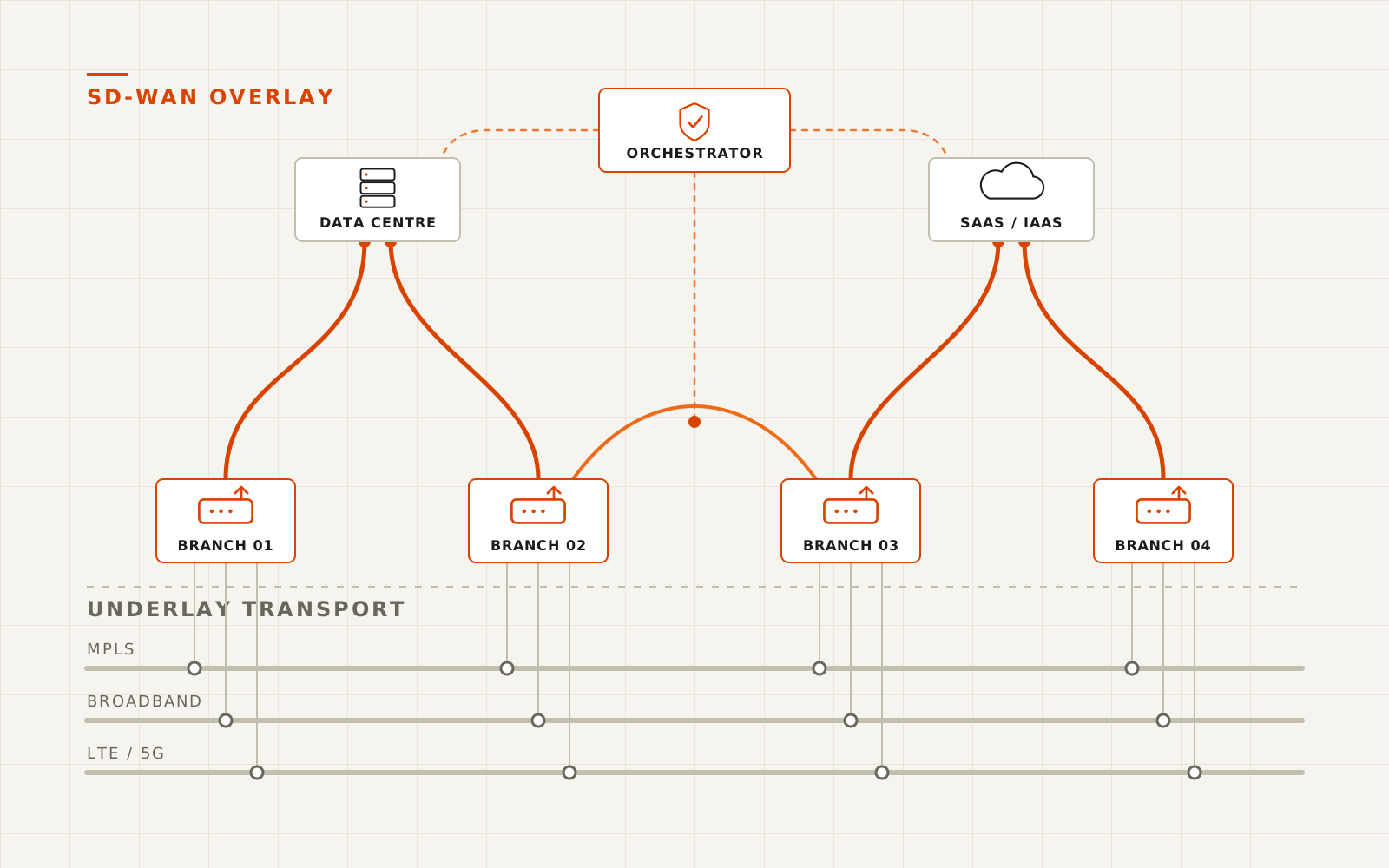
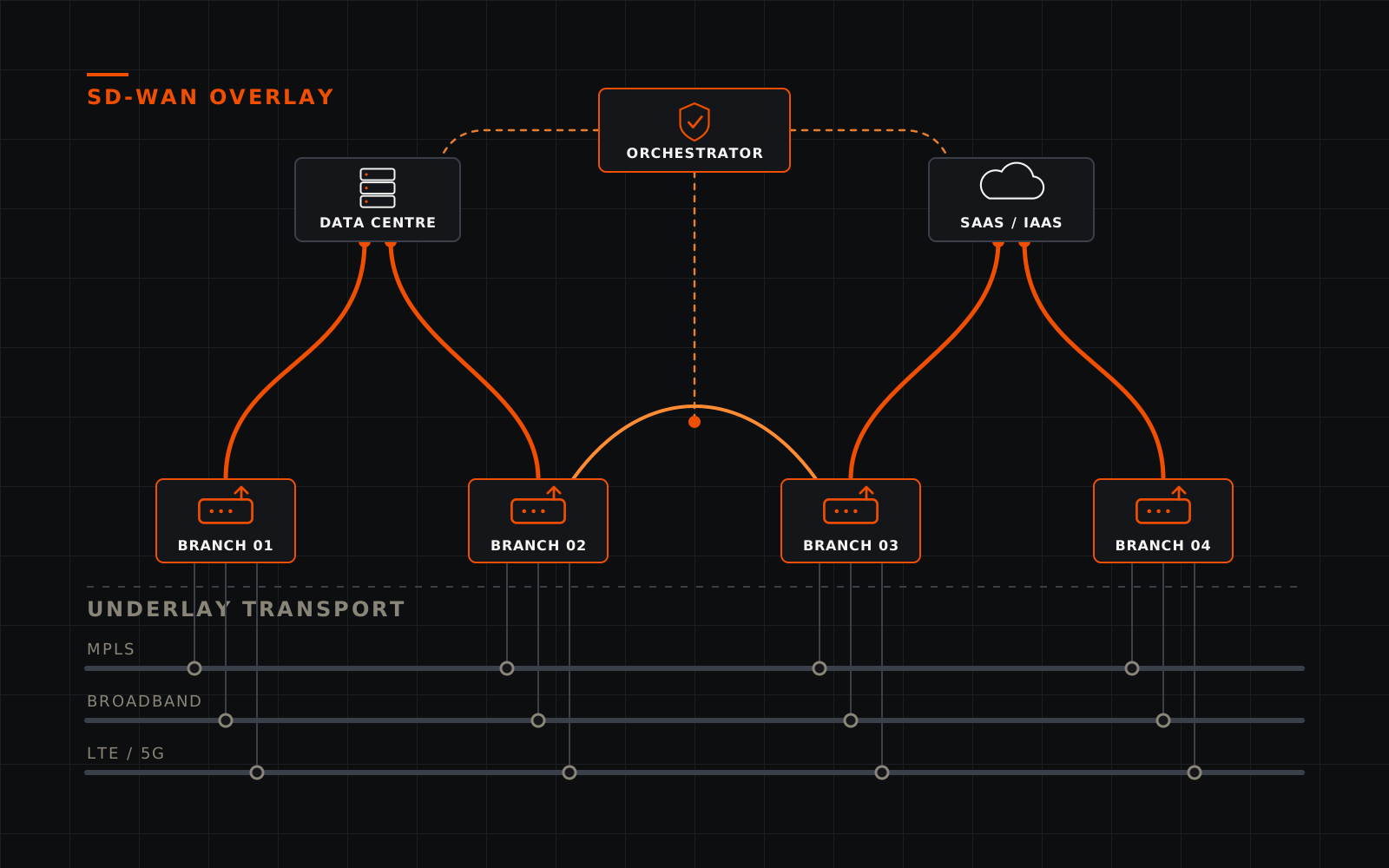
SD-WAN is an overlay and policy-management approach. SD-WAN edges identify traffic and apply configured path rules over available underlay connections. Those links may include internet broadband, cellular, and MPLS. SD-WAN can therefore use MPLS rather than simply replace it. The SD-WAN introduction explains that relationship at a high level.
| Consideration | MPLS service | SD-WAN approach |
|---|---|---|
| What is being compared | A provider-delivered WAN service with terms defined by its contract. | A software-managed overlay and policy system that uses configured underlay connections. |
| Traffic handling | Paths and service characteristics depend on the provider design and agreement. | Policies can classify and steer traffic across available links; behaviour depends on configuration and link conditions. |
| Cloud access | Cloud traffic may use a provider or central-site path, depending on the design. | Direct internet access may be configured for selected traffic when security requirements allow it. |
| Performance evidence | Review contracted measures and test the application path end to end. | Measure the underlying links, selected paths, failover, and application experience. |
| Security | Private routing is not a substitute for encryption, inspection, identity, or endpoint controls. | Security may be integrated or connected as separate services; verify the controls and owners on each path. |
| Cost and operations | Include circuit, support, contract, and change costs. | Include circuits, platform, edge devices, security services, support, migration, and ongoing policy operations. |
When can MPLS remain a good fit?
MPLS may remain appropriate where a specific application or site depends on a contracted service characteristic that the organisation has measured and cannot readily replace. It can also remain in place while a contract, application dependency, or migration gate is unresolved. Confirm that the relevant commitment covers the end-to-end path the application actually uses.
When is SD-WAN worth evaluating?
SD-WAN is worth evaluating when a multi-site organisation needs policy across different connection types, application-specific path handling, or a more direct route for selected cloud traffic. It may be useful alongside MPLS or over other underlays. Its impact depends on local connectivity, application behaviour, the design, and the team's ability to operate policy. Common reasons to evaluate it are covered in why consider SD-WAN?
When does a hybrid WAN make sense?
A hybrid design can retain MPLS for selected paths while using SD-WAN policy across other links or sites. It can also support coexistence while an organisation learns from a bounded change or reaches a contract milestone. Make the policy, failover behaviour, security inspection, support ownership, and retirement conditions explicit for each path.
Before selecting a model, compare the actual requirements at each site rather than choosing from a label. Include the full lifecycle cost and transition overlap; SD-WAN total cost of ownership covers cost evaluation in depth. For topology and policy decisions, continue to SD-WAN design considerations and SD-WAN architecture. Detailed migration steps are covered in SD-WAN deployment: risks, sequencing, and mitigation.
For additional comparison perspectives, the original article linked to Cisco's MPLS and SD-WAN explainer and Alkira's discussion of whether SD-WAN replaces MPLS. These are secondary, vendor-published sources; verify service claims against current contracts and independent requirements.